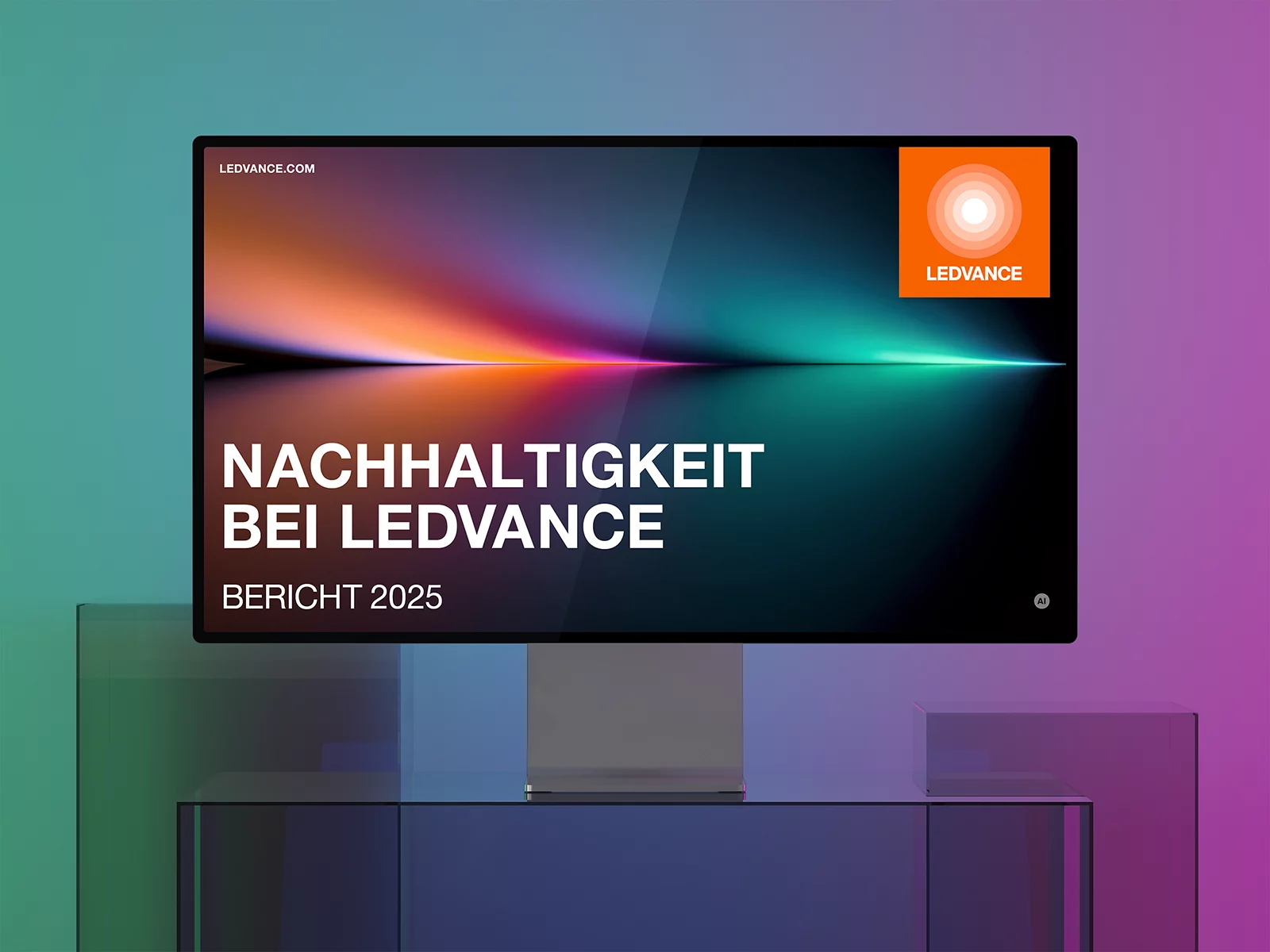
LEDVANCE GmbH, based in Garching near Munich, is an international company for lighting products and networked lighting applications that emerged from the sale of OSRAM Licht AG in July 2016.
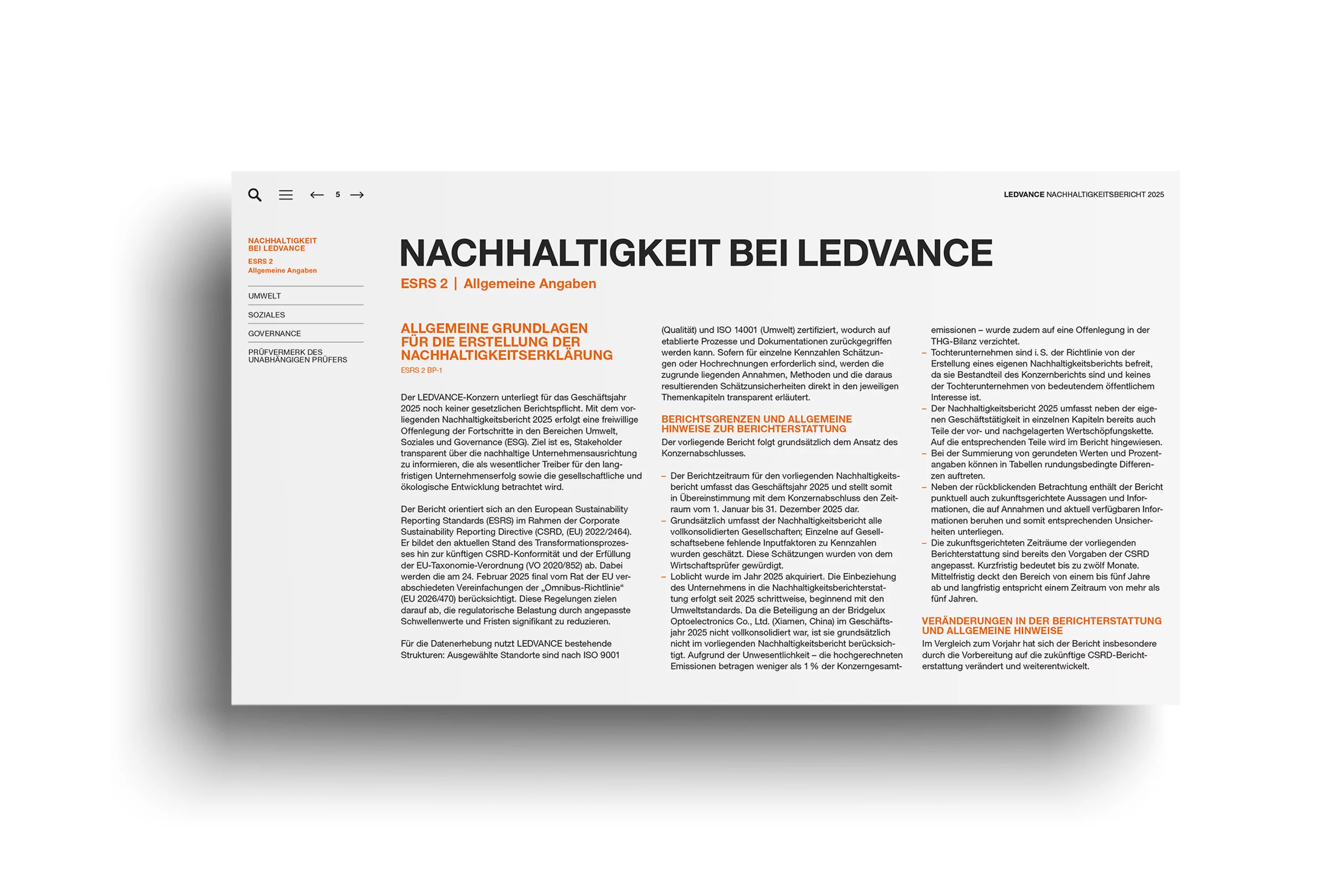
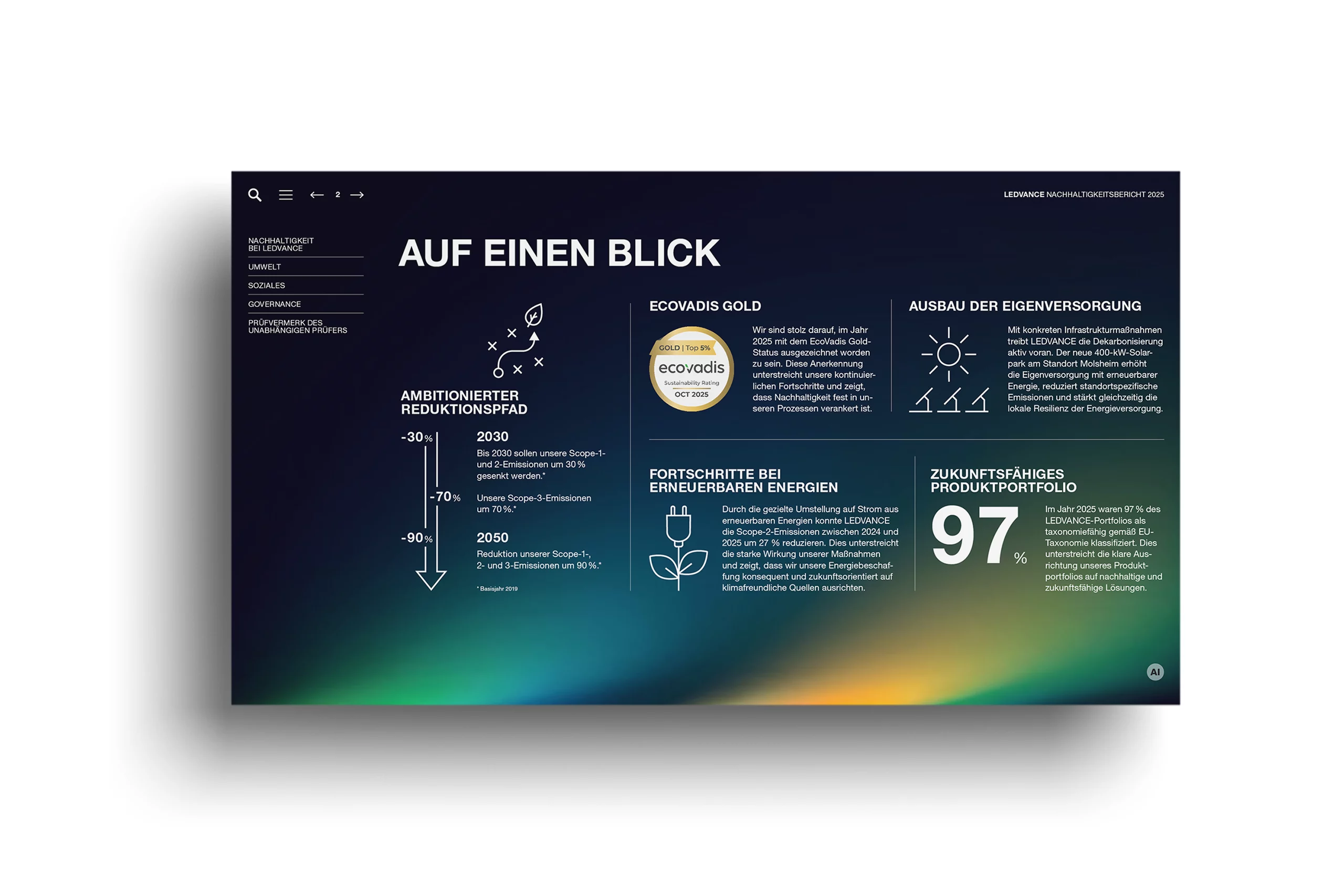
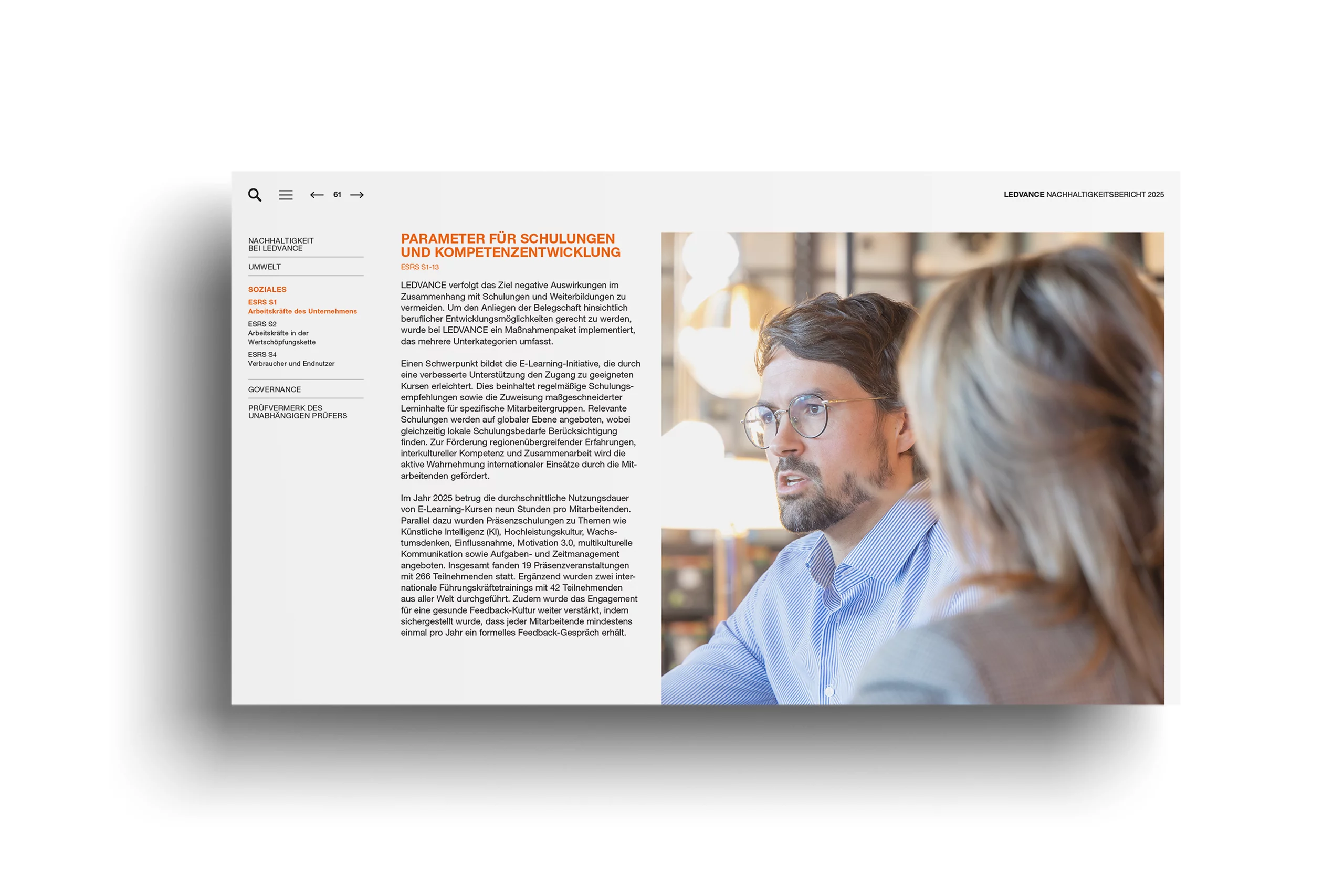
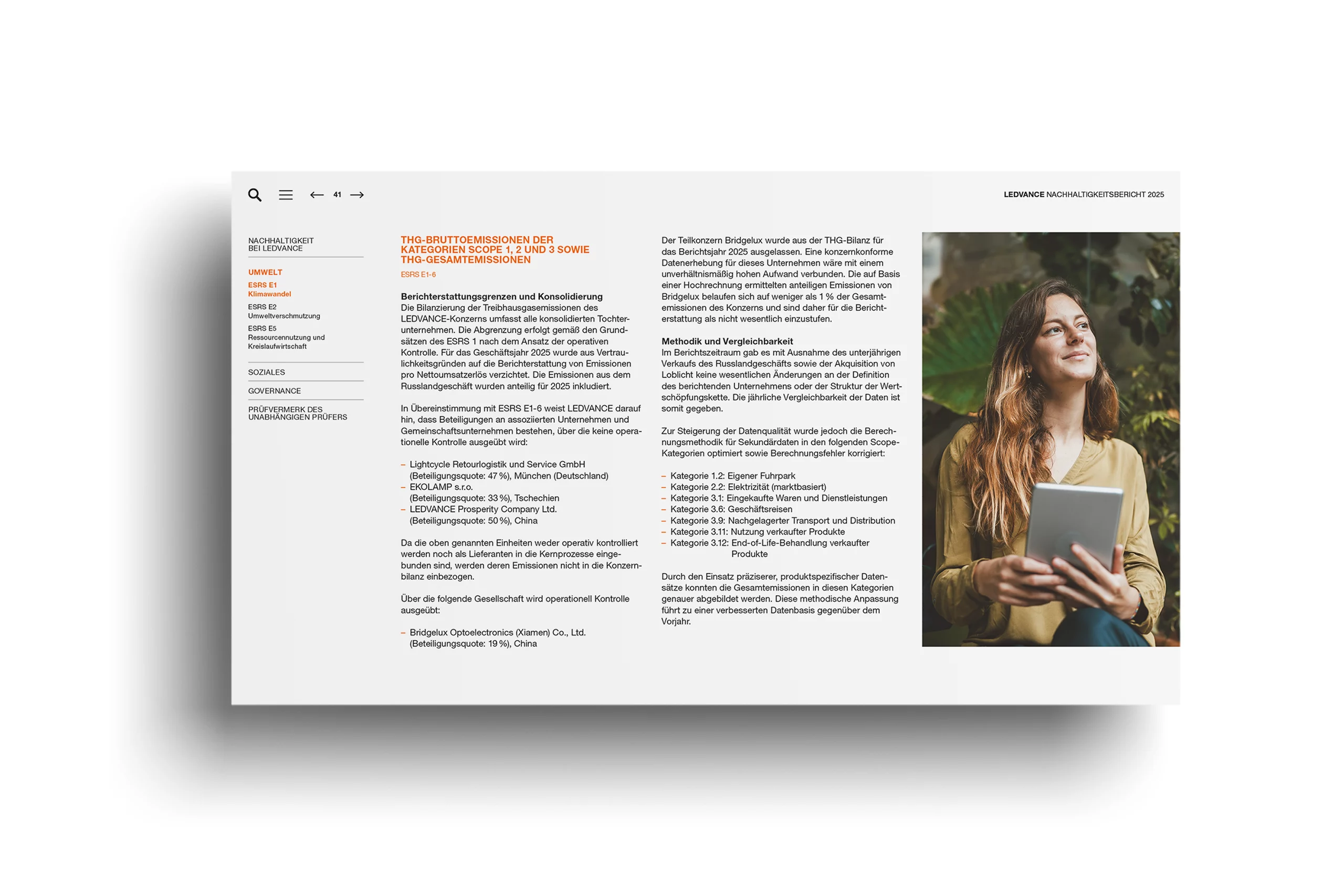
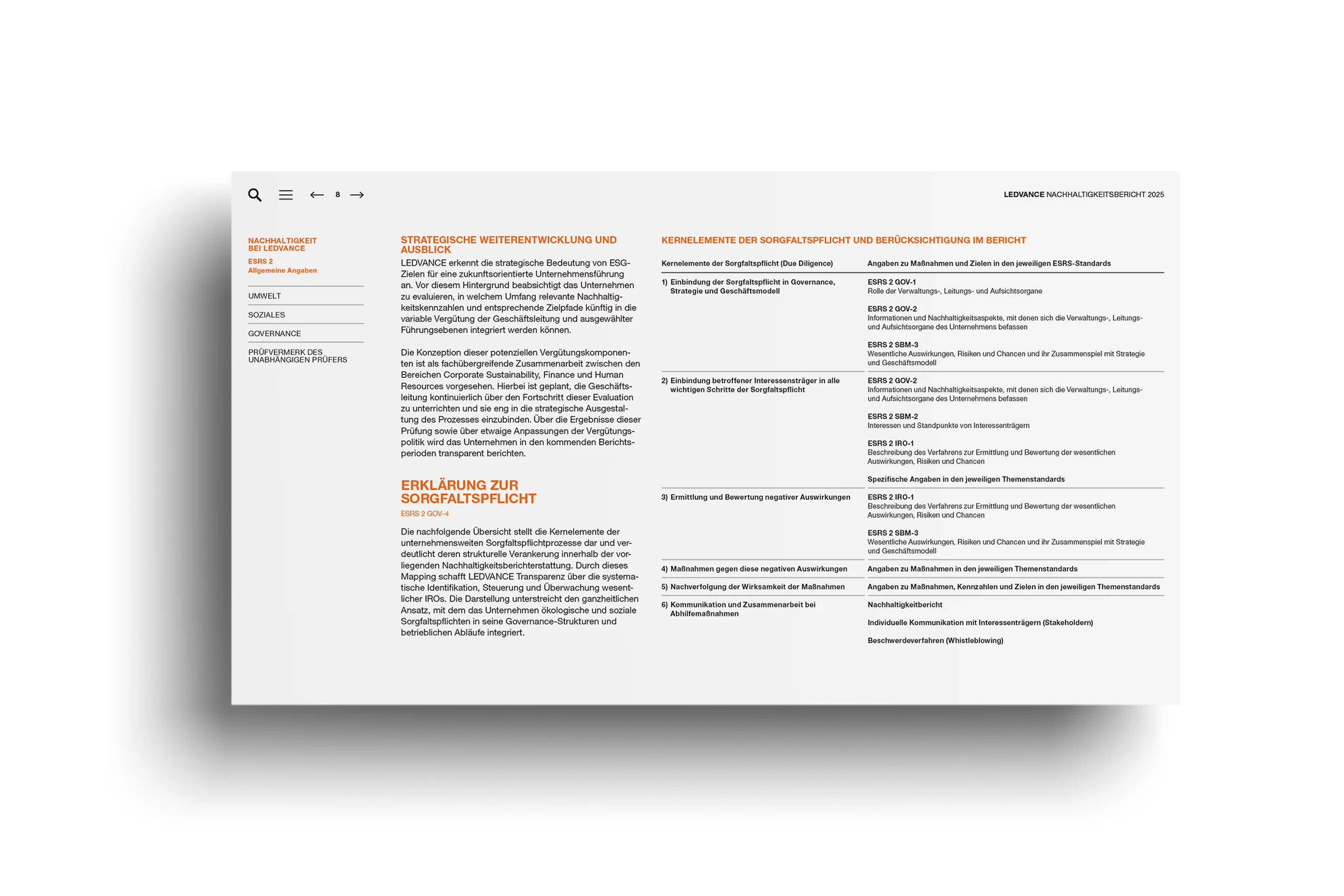
For the fourth year in a row, we have been reliably supporting LEDVANCE in the preparation of its sustainability reports—from conceptual development and design to copywriting and coordination with the external audit.
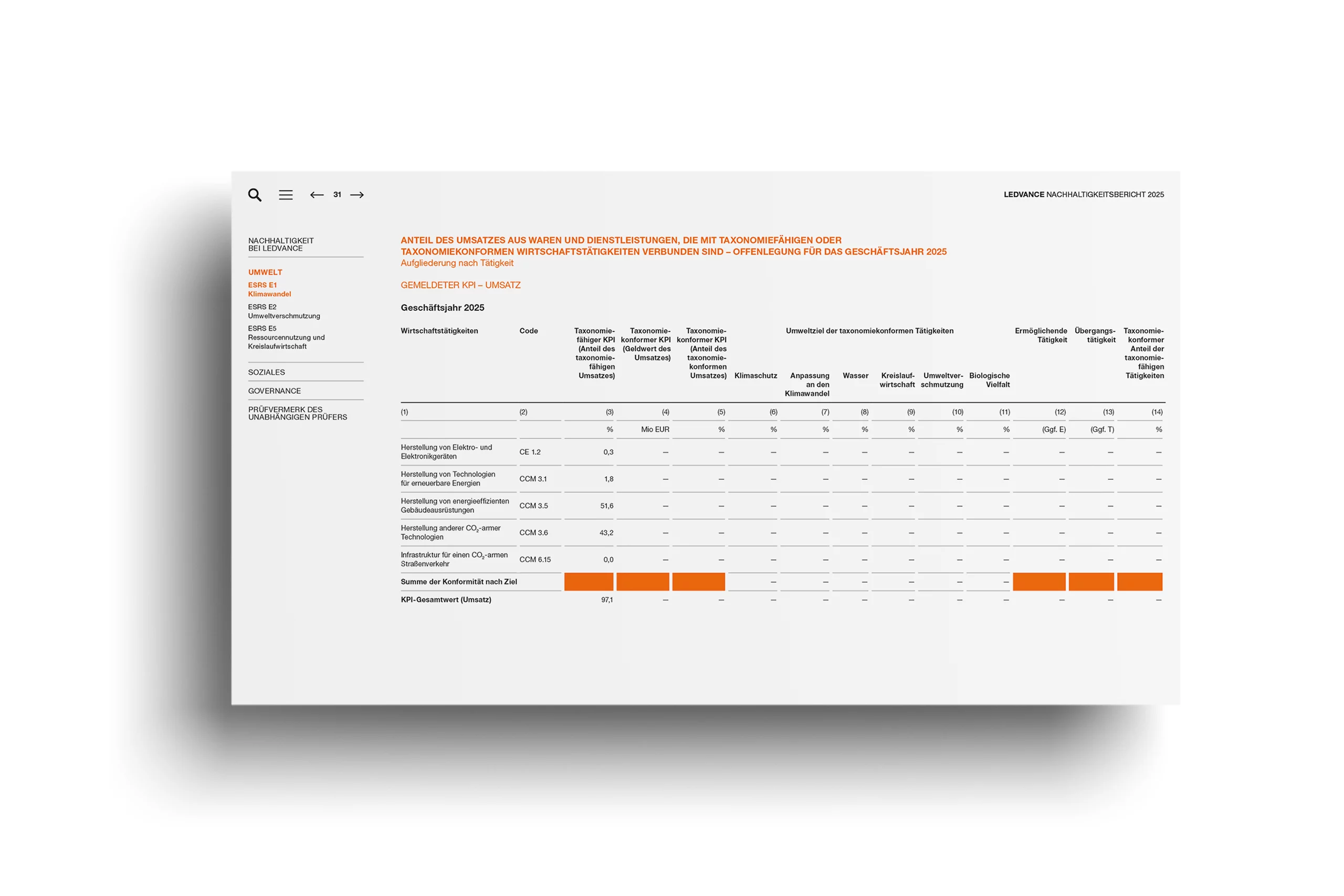
Initially, the reports were based on the Global Reporting Initiative (GRI) standards and published in both German and English as interactive online PDFs. Since 2024, the report has increasingly been aligned with the European Sustainability Reporting Standards (ESRS) in accordance with the Corporate Sustainability Reporting Directive (CSRD), both before and after the omnibus amendment.
“Nur Baute, together with the auditor, guided us safely through the complex process of sustainability reporting.”
“Our sustainability topics were presented not only in a factual manner, but also creatively and engagingly. A report that people will actually read—clearly structured, attractively designed, and authentic.”
ANDREAS ADAM
SENIOR DIRECTOR OF GLOBAL SUSTAINABILITY AT LEDVANCE

Thanks to the expertise of Nur Baute & adelphi Consult—now known as phiyond (since September 2023)—LEDVANCE was able to strategically chart its course toward becoming a sustainable and forward-looking company during the first few years of reporting.
As part of the consulting project at the time, an environment analysis and benchmarking were first carried out to identify relevant industry trends in relation to sustainability as well as market competitors and their level of ambition. A sustainability policy was also developed in the first year to anchor this throughout the company, supplementing existing management systems and guiding the actions of all employees with regard to sustainability and social responsibility.
In the second reporting cycle in particular, the consulting focus was increasingly on preparing for the Corporate Sustainability Reporting Directive (CSRD), including the increasing external audit requirements. This included an initial double materiality analysis based as closely as possible on the European Sustainability Reporting Standards (ESRS), taking into account the availability of data along the value chain and involving various stakeholders. Building on this, a gap analysis of the existing report was carried out in comparison with the new standards, as well as an approach to the disclosures in accordance with the Taxonomy Regulation. The project was supplemented by the exploration of possible future communication formats.